
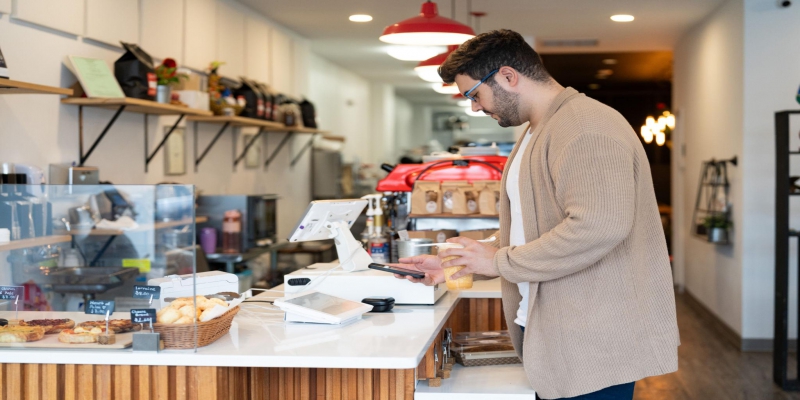
Rapid growth in digital payments is pushing small firms to modernise customer services, as consumers increasingly expect fast, seamless and flexible ways to pay.
Across retail, hospitality, trades and personal services, cash usage has declined over recent years while card, mobile wallet and online payment methods have expanded. For many SMEs, accepting digital payments is no longer optional but a basic customer expectation.
Recent payments industry data continues to show strong usage of contactless transactions and rising adoption of mobile wallets. Online checkout convenience has also become a key factor influencing purchasing decisions.
For smaller businesses, the commercial impact is direct. Customers who cannot pay using preferred methods may abandon purchases or choose competitors offering faster, simpler transactions.
As a result, firms are investing in card terminals, QR payments, e-commerce checkout systems and integrated point-of-sale technology. Many are also linking payments with stock management, accounting and loyalty programmes.
Contactless capability has become standard in many sectors. Cafés, convenience shops, salons and local service providers increasingly rely on tap-to-pay transactions to speed queues and improve throughput during busy periods.
According to payments analysts, faster checkout experiences can help improve conversion and customer satisfaction, particularly in high-volume environments where waiting time affects purchasing behaviour.
Online and offline channels are also converging. Smaller retailers that once traded only in-store are increasingly combining physical sales with click-and-collect, delivery or social commerce.
This requires more sophisticated payment systems capable of handling refunds, subscriptions, split payments and multiple sales channels from one platform.
Tradespeople and mobile service providers are changing too. Electricians, plumbers, tutors and freelancers increasingly accept payments on-site through portable terminals or payment links, improving cash flow and reducing unpaid invoices.
For many SMEs, faster settlement times are another attraction. Quicker access to funds can improve working capital management, especially for firms with tight liquidity.
However, costs remain a concern. Transaction fees, hardware charges and software subscriptions can weigh more heavily on smaller businesses than on larger chains with stronger negotiating power.
Cybersecurity is another issue. As digital transactions grow, SMEs must pay more attention to fraud prevention, secure systems and staff awareness around scams.
Customer expectations are evolving beyond payment alone. Many consumers now expect digital receipts, loyalty integration, easy refunds and transparent pricing as part of the service experience.
Older assumptions that some demographics prefer only cash are weakening, though cash still remains relevant in parts of the market. Many businesses therefore maintain mixed payment options rather than going fully cashless.
Government and banking trends also influence adoption. Branch closures and changing cash infrastructure in some areas have made digital systems more practical for everyday trading.
Technology providers are targeting the SME market with simpler pricing, mobile-first tools and bundled business services such as invoicing or analytics.
Competition may increase as barriers fall. If most firms can offer modern payment convenience, service quality, speed and trust become more important differentiators.
Looking ahead, analysts expect digital payment adoption among SMEs to continue rising as younger consumers and business buyers favour frictionless transactions.
For small firms, payments are no longer just a back-office process. They are becoming a visible part of customer experience, operational efficiency and commercial competitiveness.