
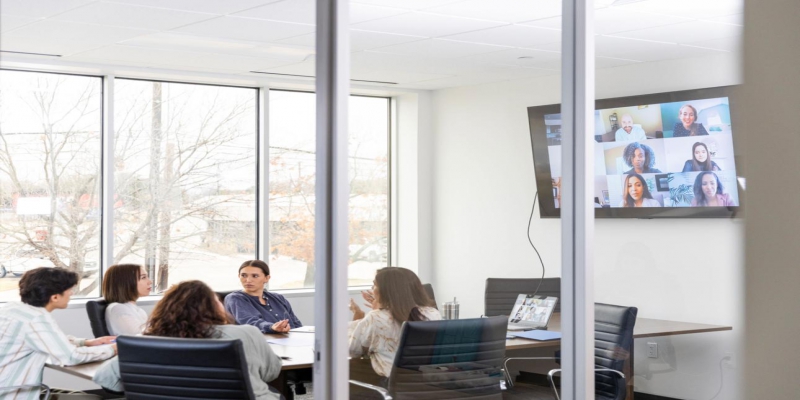
Hybrid working challenges are driving new management styles among executive teams, as businesses adapt leadership models to a workforce split between offices, homes and multiple locations.
What began as an emergency shift for many organisations has become a long-term operating reality. Across professional services, finance, technology and public sector organisations, mixed-location work is now embedded in daily operations.
For executive leaders, this has required more than policy adjustments. It has changed how culture is built, how performance is measured and how management authority is exercised.
Traditional leadership often relied heavily on physical visibility, spontaneous interaction and in-person oversight. In hybrid environments, those habits are less effective and sometimes counterproductive.
Recent workplace studies suggest employees continue to value flexibility highly, particularly in office-based roles. As a result, executives seeking to retain talent are cautious about rigid attendance mandates.
Communication has become one of the most significant leadership challenges. Senior teams are placing greater emphasis on clarity, consistency and transparency to ensure staff receive the same messages regardless of location.
Town halls, recorded updates, written summaries and digital collaboration platforms are increasingly central to executive communication strategies.
Performance management is also evolving. Many organisations are moving away from measuring presence and towards outcomes, milestones and quality of delivery. This requires clearer objectives and stronger managerial capability.
According to management analysts, organisations that define expectations clearly and empower teams often perform better in hybrid models than those relying on surveillance or excessive control.
Trust has therefore become a more visible leadership currency. Employees who feel monitored unnecessarily may disengage, while those given autonomy often respond positively when accountability is clear.
Middle managers play a crucial role in this transition. Executives may set policy, but day-to-day employee experience depends heavily on how line managers implement flexibility, workload balance and communication norms.
Culture building has become more deliberate. Informal office interactions once helped reinforce relationships and shared identity. Hybrid organisations now need intentional moments for collaboration, mentoring and social connection.
Onboarding new staff presents another challenge. Senior leaders are increasing focus on structured induction, mentoring and documentation so newer employees can integrate effectively without relying on physical proximity.
There are also inclusion concerns. Remote employees may fear reduced visibility for promotions or strategic opportunities, while office-based staff may perceive unequal flexibility. Fairness has become a board-level leadership issue.
Technology investment supports many responses. Collaboration suites, workflow tools and digital whiteboards help teams coordinate, but software alone does not solve leadership gaps.
Some executives are redesigning office space around collaboration rather than fixed desk attendance, using in-person time for problem-solving, training and relationship-building.
Productivity debates remain active. While some leaders worry about reduced oversight, others report strong performance when hybrid models are well managed and roles are suitable for flexible work.
Sector differences matter. Customer-facing, operational and site-based industries have less flexibility than desk-based sectors, making universal leadership models unrealistic.
Economic pressure may influence future policy, but many analysts believe hybrid work has become a structural feature rather than a temporary phase in many industries.
Looking ahead, executive success is likely to depend less on enforcing location and more on leading distributed teams effectively through trust, clarity and accountability.
For senior leaders, hybrid working has become a management test: those who modernise their style may strengthen engagement and performance, while those clinging to older habits risk losing both talent and momentum.