
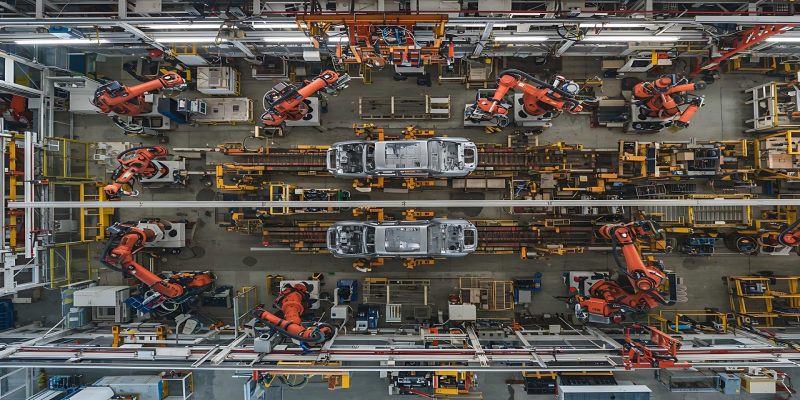
Manufacturers are increasing spending on robotics and automation as they seek to address long-standing productivity challenges. Data from Make UK indicates that a growing proportion of firms are prioritising automation as part of their investment strategies. This reflects mounting pressure to improve efficiency in a sector that has struggled to match productivity levels seen in comparable economies.
The productivity gap remains a key concern for industry leaders and policymakers. According to official figures from the Office for National Statistics, output per hour has lagged behind countries such as Germany and the United States for several years. This has intensified the focus on automation as a means of closing the gap and boosting competitiveness.
Rising costs are reinforcing the need for technological investment, with manufacturers facing higher energy prices and increased input costs. These pressures have eroded margins and forced firms to look for ways to optimise production processes. Robotics is increasingly viewed as a solution that can deliver both efficiency gains and cost control over the long term.
Investment in robotics has accelerated in recent years, with industry estimates suggesting double-digit growth in spending since 2022. This includes the adoption of robotic arms, automated assembly systems and advanced quality control technologies. These systems allow manufacturers to operate with greater precision and consistency.
Automation is particularly prominent in sectors such as automotive and aerospace, where high levels of precision are required. Robotic systems are used extensively in welding, assembly and inspection processes, reducing the likelihood of defects and improving overall product quality.
The adoption of automation is also helping firms to manage labour shortages, which continue to affect the sector. Difficulties in recruiting skilled workers have made it increasingly challenging to maintain output levels, further driving investment in technology.
At the same time, supply chain disruptions have encouraged manufacturers to increase resilience by bringing more production capabilities in-house. Automation supports this shift by enabling efficient domestic production without significantly increasing labour requirements.
However, the transition presents challenges, particularly for smaller manufacturers that may lack the financial resources to invest in advanced systems. This raises concerns about uneven adoption across the sector and the potential widening of productivity differences between firms.
The shift towards automation is also changing workforce requirements, with demand rising for engineers, technicians and data specialists. This has exposed a growing skills gap, as many firms struggle to find employees with the necessary expertise.
Training and education initiatives are being expanded to address this issue, but progress remains gradual. Industry bodies have warned that without sufficient investment in skills, the benefits of automation may not be fully realised.
Overall, robotics investment is becoming a central pillar of manufacturing strategy, enabling firms to navigate economic pressures while improving efficiency. As competition intensifies globally, automation is expected to play an increasingly important role in shaping the future of the sector.