
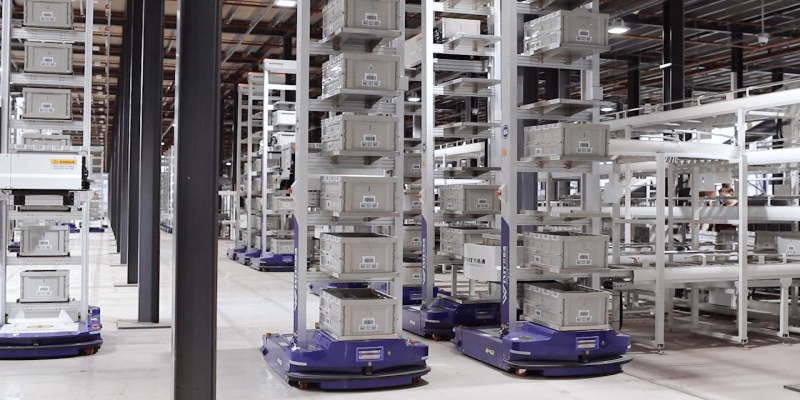
Retailers are accelerating investment in warehouse automation as sustained e-commerce demand continues to reshape logistics operations. Data from the Office for National Statistics shows that online sales still account for around 25% of total retail activity, a level significantly higher than before the pandemic. This structural shift in consumer behaviour has forced retailers to rethink how goods are stored, processed and delivered.
Companies such as Amazon have been at the forefront of this transformation, expanding the use of robotics across fulfilment centres to increase speed and efficiency. Automated systems are now capable of handling large volumes of orders with minimal human intervention, allowing operations to scale rapidly during peak periods.
The pressure to invest in automation is being driven not only by demand but also by rising operational costs. Wage growth, energy prices and supply chain disruptions have all contributed to tighter margins, pushing retailers to adopt technologies that can improve productivity while reducing reliance on labour.
Industry data indicates that warehouse robotics can reduce fulfilment times by between 30% and 40%, while also lowering error rates in picking and packing processes. This improvement in efficiency has become critical as delivery speed increasingly influences purchasing decisions, particularly in urban markets.
Automation is also transforming inventory management, with real-time tracking systems providing greater visibility over stock levels and movement. This allows retailers to optimise storage, reduce waste and respond more effectively to fluctuations in demand, particularly during high-volume periods such as seasonal sales.
However, the shift towards automation requires substantial upfront investment, which can be a barrier for smaller retailers. While large companies are able to fund complex robotic systems and infrastructure upgrades, smaller firms often struggle to match these capabilities, creating disparities in operational efficiency.
The expansion of warehouse automation is also reshaping the workforce, with demand increasing for technical roles related to system maintenance and data management. At the same time, traditional manual roles are being reduced, contributing to broader changes in employment patterns within the retail sector.
Environmental considerations are becoming increasingly relevant as well, as higher delivery volumes raise concerns about emissions and sustainability. Some retailers are integrating automation with greener logistics solutions, including optimised delivery routes and the use of electric vehicles.
Competition within the sector is intensifying, with retailers competing not only on price but also on delivery speed and reliability. Automation provides a significant advantage in this environment, enabling companies to meet rising customer expectations more effectively.
Technology providers are benefiting from this trend, as demand for advanced robotics and warehouse management systems continues to grow. This is driving further innovation and accelerating the pace of change across the logistics landscape.
Overall, warehouse automation is becoming a defining feature of modern retail, enabling businesses to balance efficiency, cost control and customer expectations in an increasingly competitive market.