
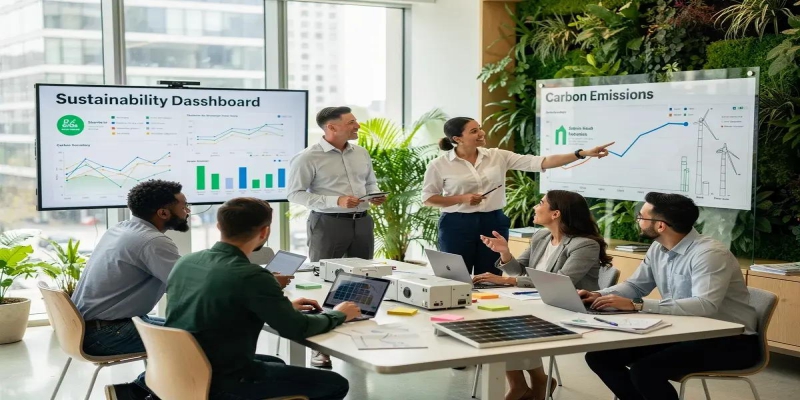
Sustainability is becoming a core requirement in project management across the UK as organisations increasingly integrate environmental, social and governance (ESG) objectives into the planning and delivery of projects.
From infrastructure developments and commercial construction to digital transformation, manufacturing and public sector programmes, sustainability is no longer being treated as a separate compliance exercise. Instead, it is becoming an essential consideration throughout the entire project lifecycle.
As organisations work towards long-term environmental commitments and respond to growing stakeholder expectations, project managers are playing an increasingly important role in ensuring that sustainability objectives are delivered alongside cost, quality and schedule.
Across the UK, organisations are recognising that sustainable project management can strengthen resilience, improve operational efficiency and create lasting business value.
Sustainability enters the planning phase
Project sustainability now begins long before implementation.
During project initiation, organisations are increasingly evaluating environmental impact, resource consumption, carbon emissions and long-term operational performance before approving investment decisions.
Rather than focusing solely on financial returns, decision-makers are adopting broader evaluation frameworks that consider future environmental and social outcomes.
Early planning now frequently includes:
- Carbon reduction objectives.
- Resource efficiency targets.
- Sustainable procurement strategies.
- Circular economy principles.
- Long-term operational resilience.
These considerations help organisations design projects with sustainability embedded from the outset.
Procurement becomes a strategic priority
Procurement is one of the areas experiencing the greatest transformation.
Organisations are increasingly assessing suppliers not only on cost and quality but also on environmental performance, ethical standards and supply chain resilience.
Project managers are working more closely with procurement teams to ensure suppliers support wider sustainability objectives.
This includes evaluating recycled materials, responsible sourcing practices, waste reduction initiatives and lower-emission logistics solutions.
By integrating sustainability into procurement decisions, organisations aim to reduce environmental impact throughout the project lifecycle.
Digital technologies improve environmental performance
Technology is helping project teams monitor sustainability more effectively.
Cloud-based project management platforms, digital twins, smart sensors and real-time analytics provide greater visibility into resource usage and operational performance.
Project managers can increasingly monitor:
- Energy consumption.
- Material utilisation.
- Waste generation.
- Carbon emissions.
- Resource efficiency.
Access to accurate data enables organisations to identify improvement opportunities while supporting more transparent reporting.
Artificial intelligence is also beginning to assist project teams by analysing environmental performance data and identifying opportunities to optimise project delivery.
Strong governance supports sustainable delivery
Delivering sustainable projects requires clear governance as well as technical capability.
Many organisations are strengthening governance frameworks to ensure sustainability objectives remain visible throughout execution rather than becoming secondary priorities once delivery begins.
Executive steering committees, project boards and sustainability specialists are increasingly working together to review progress against environmental commitments.
Benefits of stronger governance include:
- Better alignment with ESG objectives.
- Improved regulatory preparedness.
- Greater stakeholder confidence.
- More consistent decision-making.
- Enhanced long-term project value.
Strong governance helps organisations balance commercial performance with environmental responsibility.
Skills required for modern project managers
The role of project managers continues to evolve as sustainability expectations increase.
Alongside traditional competencies such as planning, budgeting and stakeholder management, professionals now require greater understanding of environmental reporting, sustainable procurement and regulatory developments.
Growing areas of expertise include:
- ESG reporting.
- Sustainable procurement.
- Carbon management.
- Circular economy principles.
- Environmental risk assessment.
Continuous professional development is becoming increasingly important as sustainability expectations continue to expand.
Challenges remain for organisations
Despite strong progress, implementing sustainable project management presents practical challenges.
Higher upfront investment costs, evolving regulatory requirements, limited availability of sustainable materials and changing reporting standards can all complicate project delivery.
Organisations must also balance commercial pressures with long-term environmental objectives.
However, many business leaders increasingly view sustainability not as an additional burden but as a strategic investment capable of improving resilience, reputation and operational efficiency.
The future of sustainable project management in the UK
Analysts expect sustainability to become even more deeply integrated into project management over the coming years as digital technologies, ESG reporting and carbon reduction initiatives continue to evolve.
Future projects are likely to place even greater emphasis on measurable environmental outcomes alongside traditional performance indicators.
For UK organisations, sustainability is no longer an optional consideration within project management. It is becoming a fundamental element of successful project delivery, supporting stronger governance, responsible growth and long-term organisational competitiveness.