

HUMAN RESOURCES AND EMPLOYMENT RELATIONS MSC
This exciting programme will give you a thorough grasp of current theory and practice relating to the management of human resources and employment relations....
View programmeWelcome to POSTGRADCOURSES — Connecting students with outstanding postgraduate programmes.
Postgraduate study insights
Human Resources plays a vital role in shaping the education and training sector, ensuring institutions attract top talent, support staff development, and embrace diversity.
From universities to vocational training centres, HR professionals ensure that institutions recruit the right talent, support employee development, and foster a positive learning environment. As education rapidly adapts to global trends, the HR sector has become a cornerstone in driving innovation, equality, and workforce resilience.
In the UK, HR in education goes beyond recruitment. It is about:
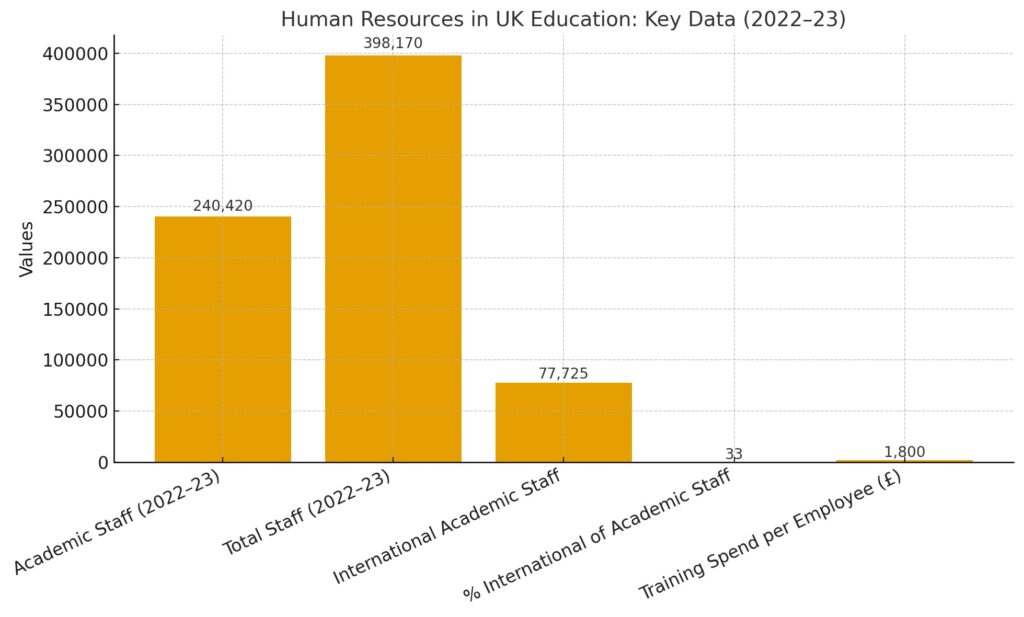
The UK higher education sector employs over 430,000 staff, with more than 240,000 academic professionals. Interestingly, 32.7% of academics are international, highlighting the global appeal of UK education. In addition, institutions spend an average of £1,800 per employee on training each year.
Human Resources is no longer just an administrative function in education—it is a strategic driver of growth, innovation, and inclusivity. HR professionals are shaping the future of the UK’s education sector by empowering teachers, enhancing student experiences, and ensuring institutions remain resilient in a rapidly changing world.
Would you like to explore more in Human Resource Management can open doors in education, business, and beyond?
Continue exploring

This exciting programme will give you a thorough grasp of current theory and practice relating to the management of human resources and employment relations....
View programme
Are you aged +19 and wanting to take your first step into a career in HR and people management? This industry-recognised qualification is designed to give you the essential knowledge and practical skills needed to succeed in entry-level HR, learning and development, and people practice roles....
View programme
Take the next step in your HR career with the CIPD Level 5 Associate Diploma in People Management. This recognised qualification is designed for those with some HR experience or a Level 3 qualification who are ready to build deeper knowledge, skills, and confidence to manage people and drive organis...
View programme
Our BSc Business Management with Human Resource Management programme combines the core foundations of business principles with a focused exploration of people management and organisational behaviour. You’ll develop expertise across key areas such as finance, marketing, operations, and strategy, wh...
View programme
Business Management at Brighton is taught by our AACSB-accredited School of Business and Law. AACSB accreditation is achieved by fewer than 6% of business schools worldwide. Do you enjoy working with and helping people? Combine business management with human resource management (HRM) and gain a ver...
View programme
In a recent report, it was found that 26% of CEOs ranked talent shortage as the top damaging factor to business outlook (Gartner, 2024), highlighting the pressing concern of finding and retaining skilled employees for many companies today. Human Resources plays a key role in all businesses, from tal...
View programme